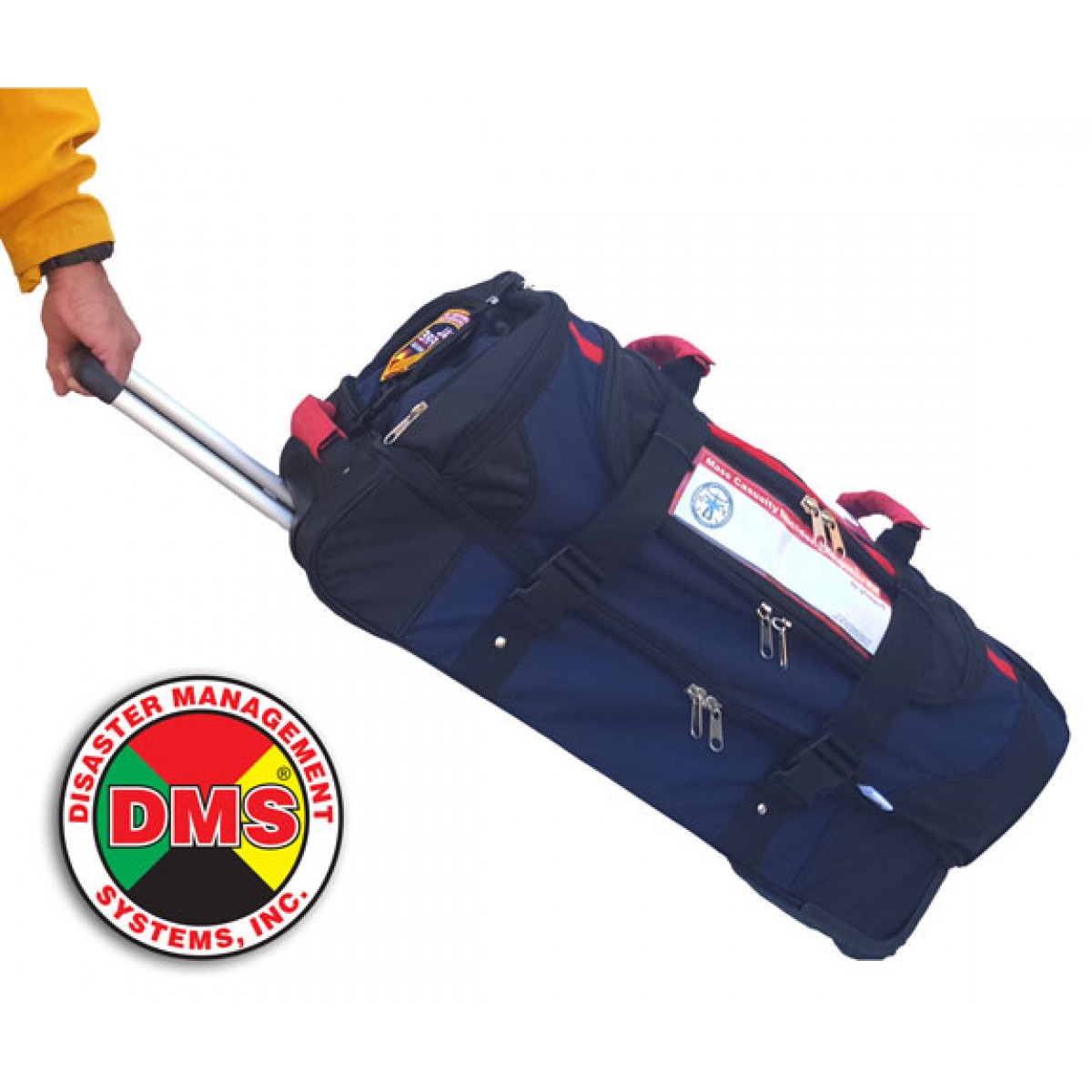
SRS® Rapid Response Kit with Rolling Duffel - SALT Version
- Product Code: DMS-06390
- Product Literature:

- Availability: Pre-Order


Available Options
SRS® Rapid Response Kit with Rolling Duffel - SALT Version
SRS® Surge Response System - The Standard for Surge Movement
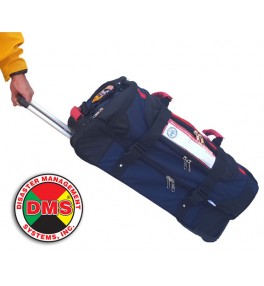
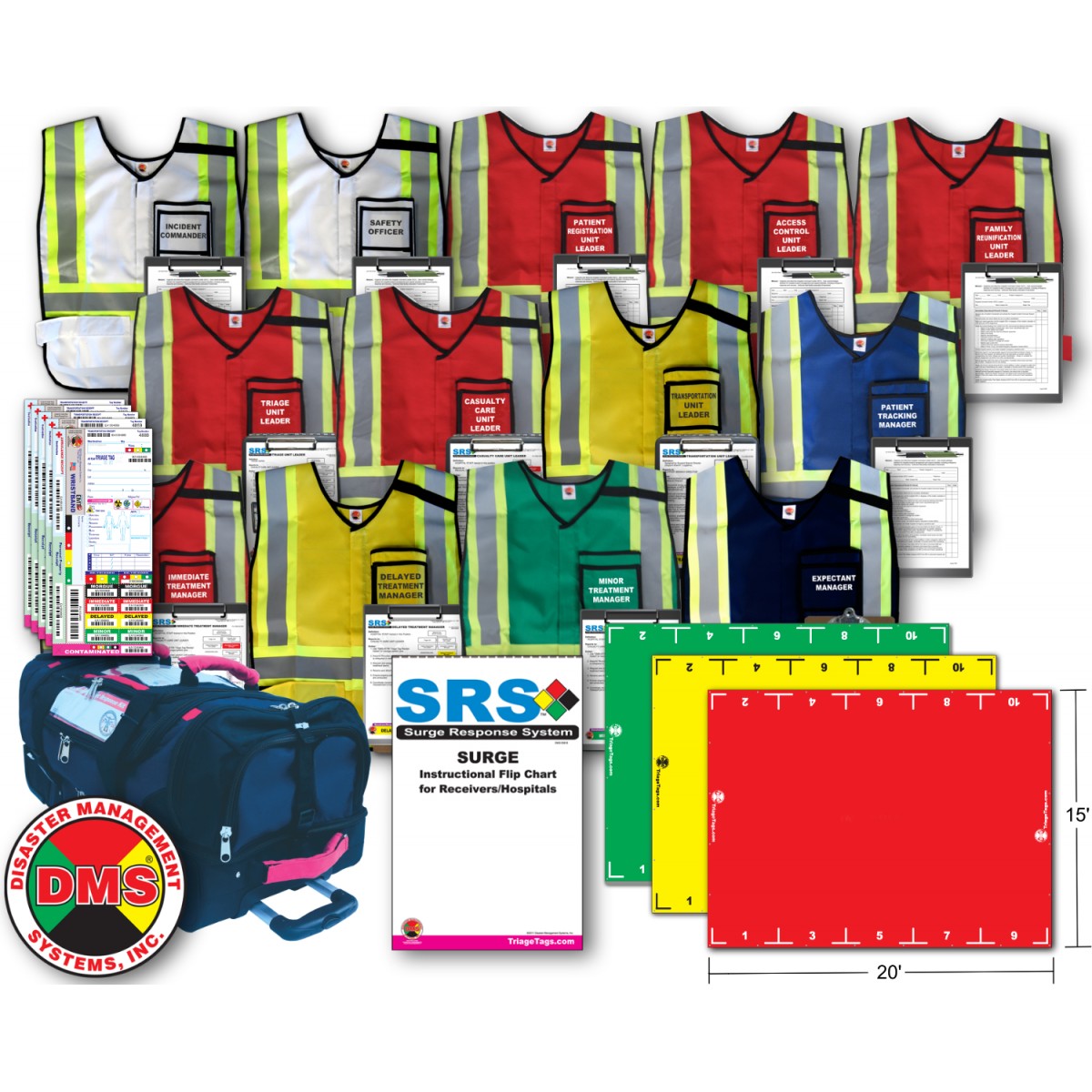
Includes our Rolling Duffel, designed for safe and efficient movement by a single resource. This all-inclusive solution is built to expedite and streamline patient influx at a medical facility by incorporating components of our EMT3® System - a proven method for enhancing Triage, Treatment, and Transport.
Key Features:
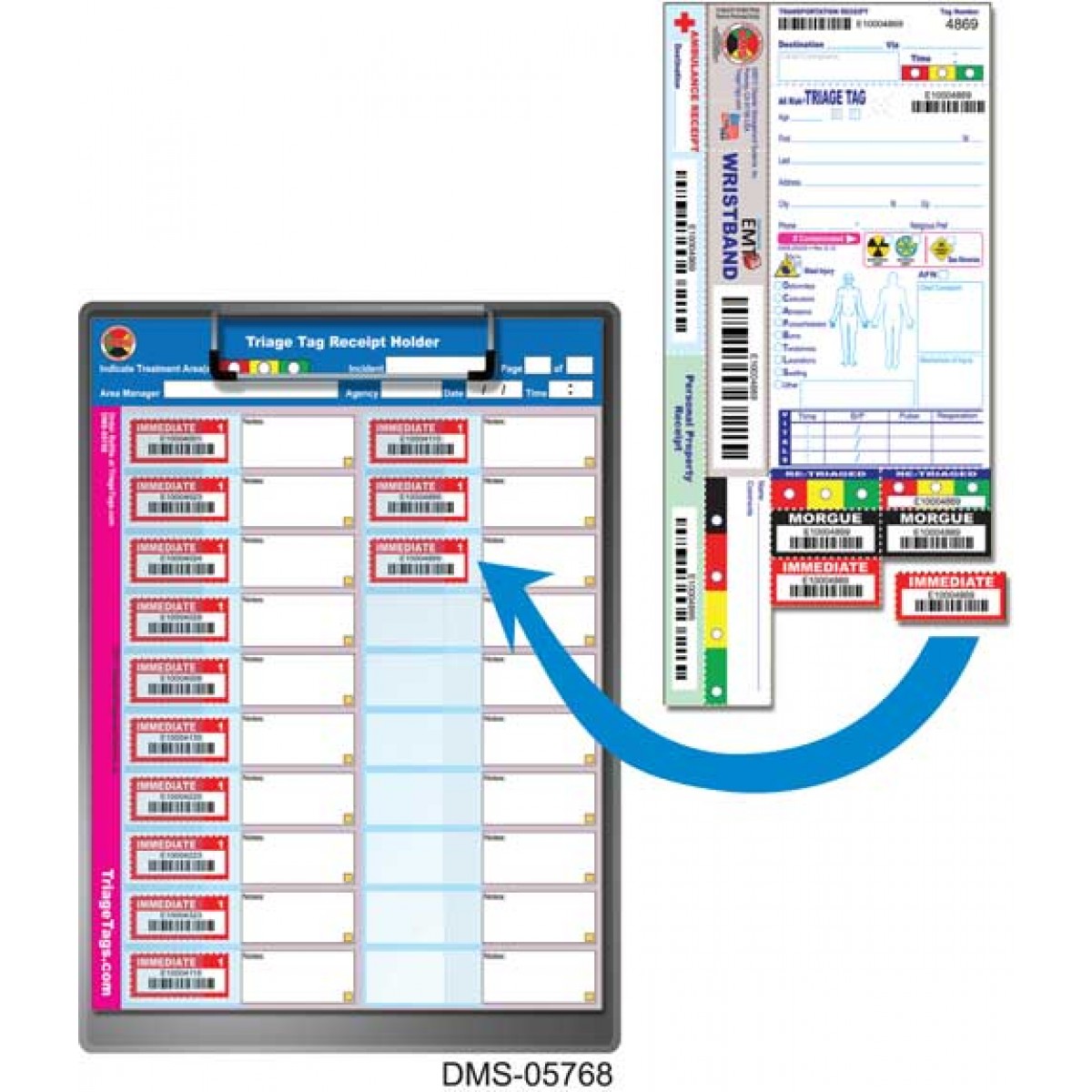
► Full Patient Accountability
► HICS 2014 Compliant
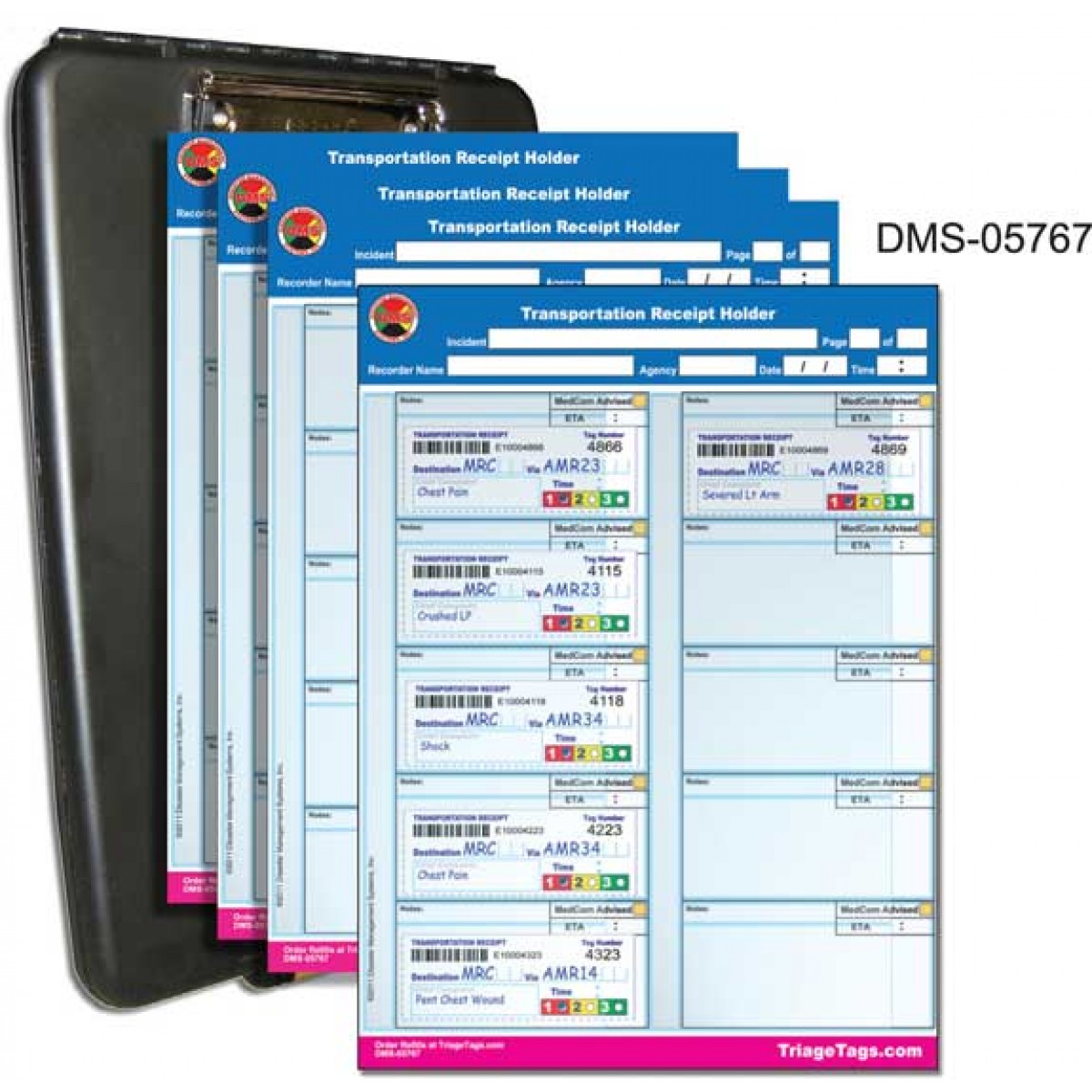
► Intuitive Forms for Each Position
► Weatherproof / Waterproof Position Forms
► Enhances Triage, Treatment and Transport
► Self-Contained, Rolling Rapid Response Kit
Contents:
• Rolling Duffel (DMS-06082)
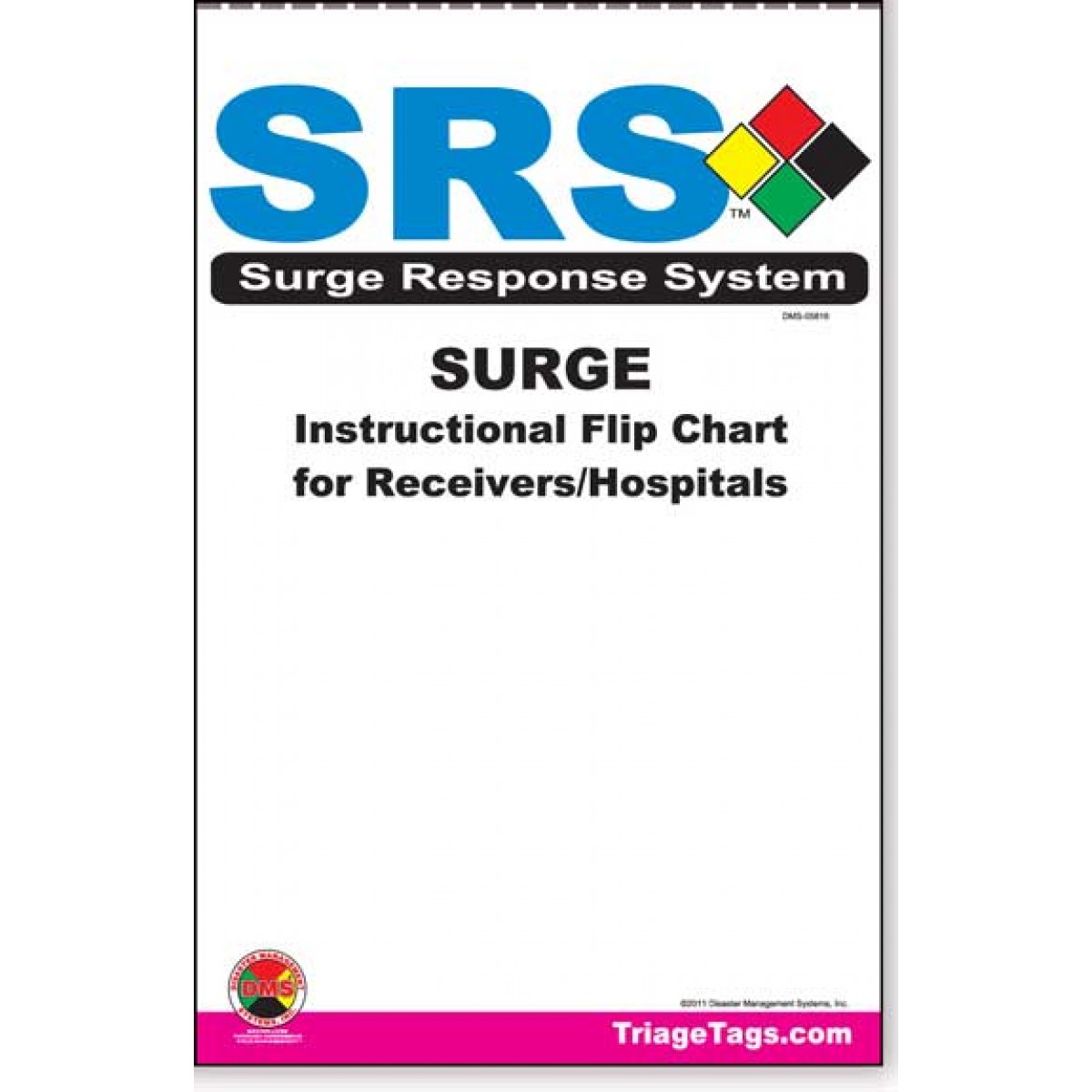
• SRS® Instructional Flip Chart (DMS-05816)
• HICS IAP Quick Start Worksheet Pad (DMS-06318)
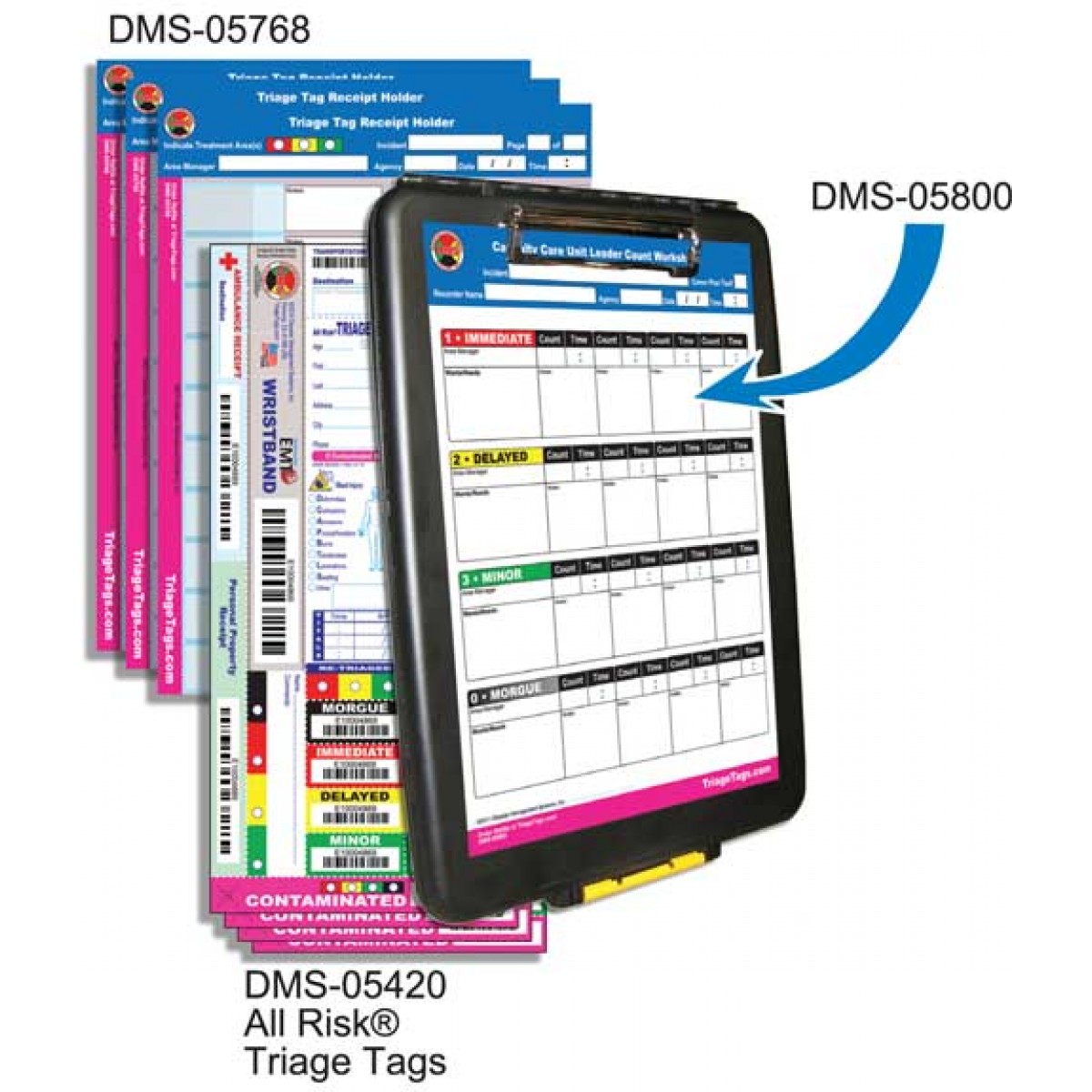
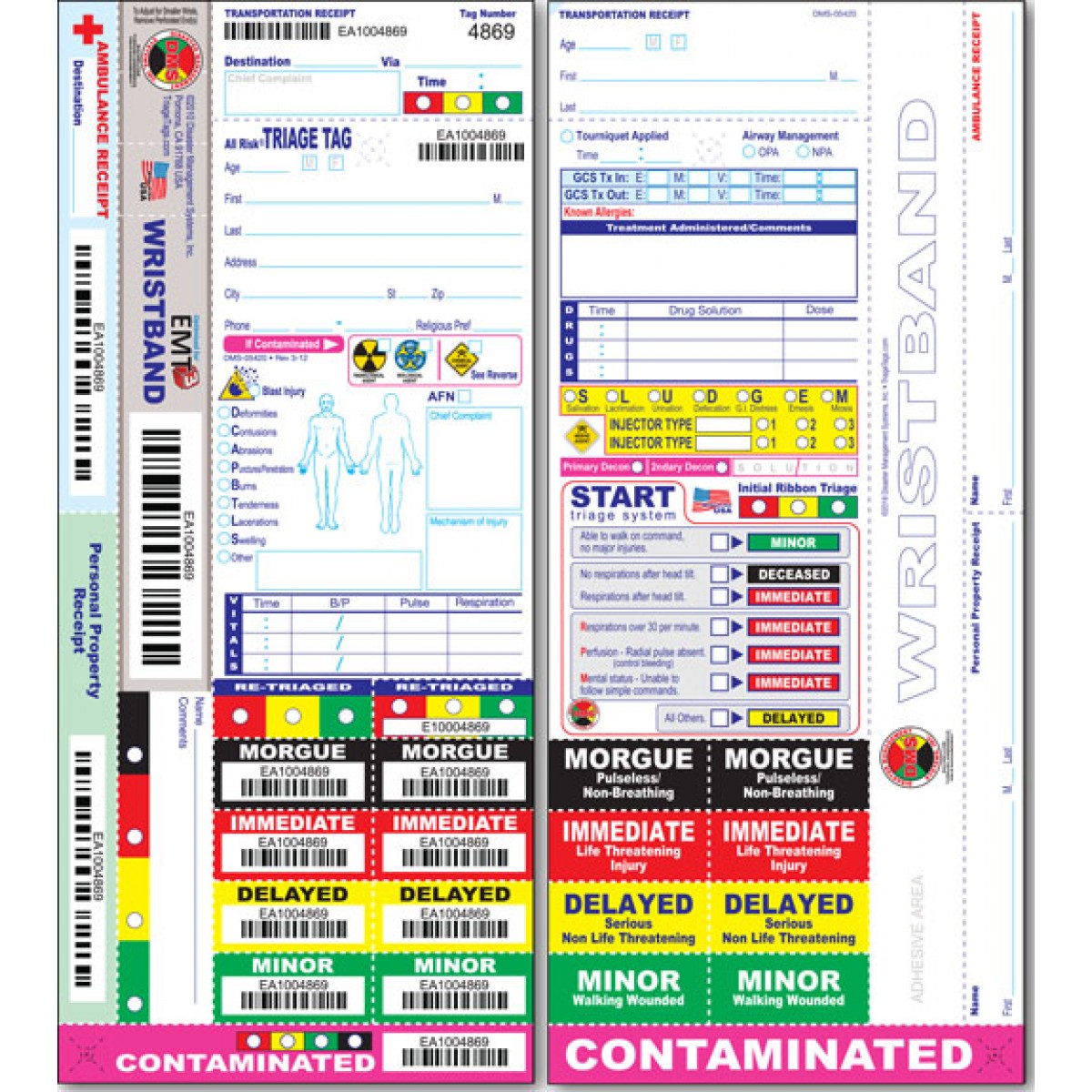
• 50 All Risk® Wristband Triage Tags (DMS-05420) (DMS-05739 Included with SALT Version)
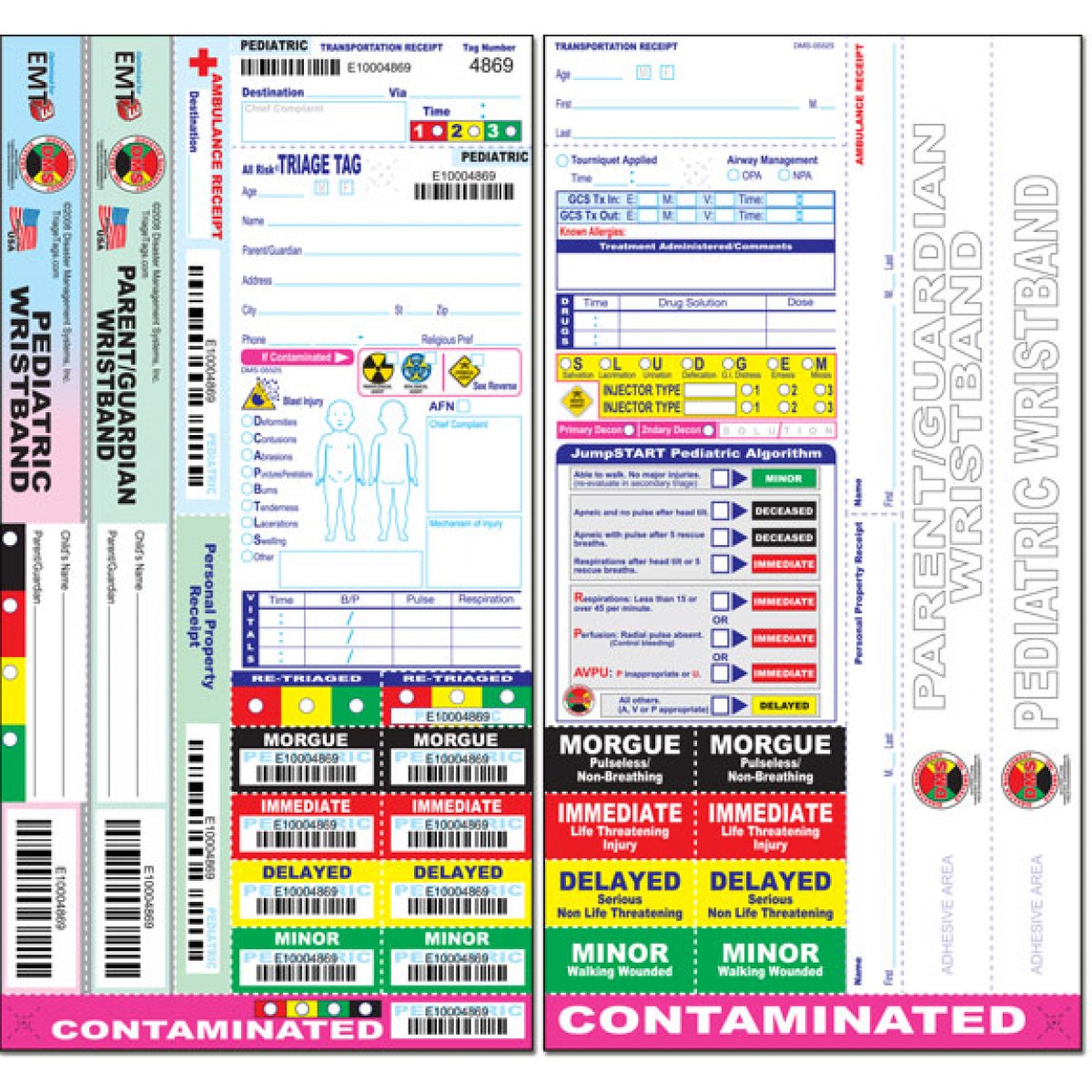
• 50 All Risk® Pediatric Dual Wristband Triage Tags (DMS-05525)
• 10 Glasgow Coma Scale / JumpSTART Pediatric Cards (DMS-05743) (DMS-06365 Included with SALT Version)
• 1 SRS® Instructional Pamphlet (DMS-05840)
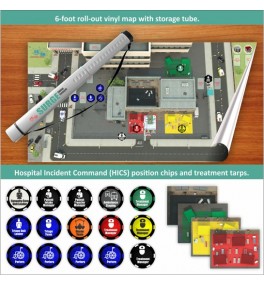
• (3) 15' x 20' Treatment Area Tarps
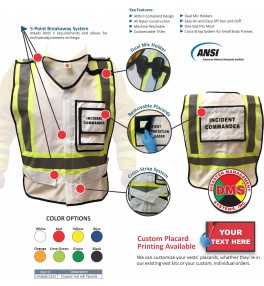
• 14 Key HICS Medical Care Branch Positions Vests + Clipboards, Pens & Job Action Sheets
Vest Positions Included:
• Triage Unit Leader (Red Vest)
• Casualty Care Unit Leader (Red Vest)
• Immediate Treatment Manager (Red Vest)
• Delayed Treatment Manager (Yellow Vest)
• Minor Treatment Manager (Green Vest)
• Morgue Manager (Black Vest)
• Incident Commander (White Vest)
• Safety Officer (White Vest)
• Patient Registration Unit Leader (Red Vest)
• Access Control Unit Leader (Red Vest)
• Family Reunification Unit Leader (Red Vest)
• Patient Tracking Manager (Blue Vest)
• Transportation Unit Leader (Yellow Vest)
• Expectant Manager (Gray Vest)
|
Fully Loaded Bag Dimensions: 30" x 18" x 15"
DMS-06390D |

Understanding Rapid Response Kit Configuration
Rapid response kits are designed to support mass casualty incidents with equipment that aligns to real-world operational priorities. As response practices continue to evolve, agencies are reassessing how certain components are used during the initial operational period.
One example is the use of morgue tarps, which in many incidents are no longer deployed in the same way due to jurisdictional responsibilities and scene management protocols.
Read more about why many agencies are moving away from morgue tarps in rapid response kits.