- DMS
- 1453 Views
Why Many Agencies Are Moving Away from Morgue Tarps - And Why We Removed Them from Our Rapid Response Kits
- Mass Casualty Response
- | 0 Comments
Why Many Agencies Are Moving Away from Morgue Tarps — And Why We Removed Them from Our Rapid Response Kits
Mass casualty incident (MCI) response continues to evolve - not just in training, but in how equipment is deployed in the field.
Across the country, agencies are reassessing what belongs in a rapid response kit based on real-world use, operational priorities, and after-action insights.
One trend we continue to see: Many agencies are moving away from deploying black treatment area (morgue) tarps.
At Disaster Management Systems (DMS), we have made the same adjustment - based on field feedback, operational realities, and current guidance surrounding mass casualty response and fatality management.
Triage Categories vs. Equipment Loadout
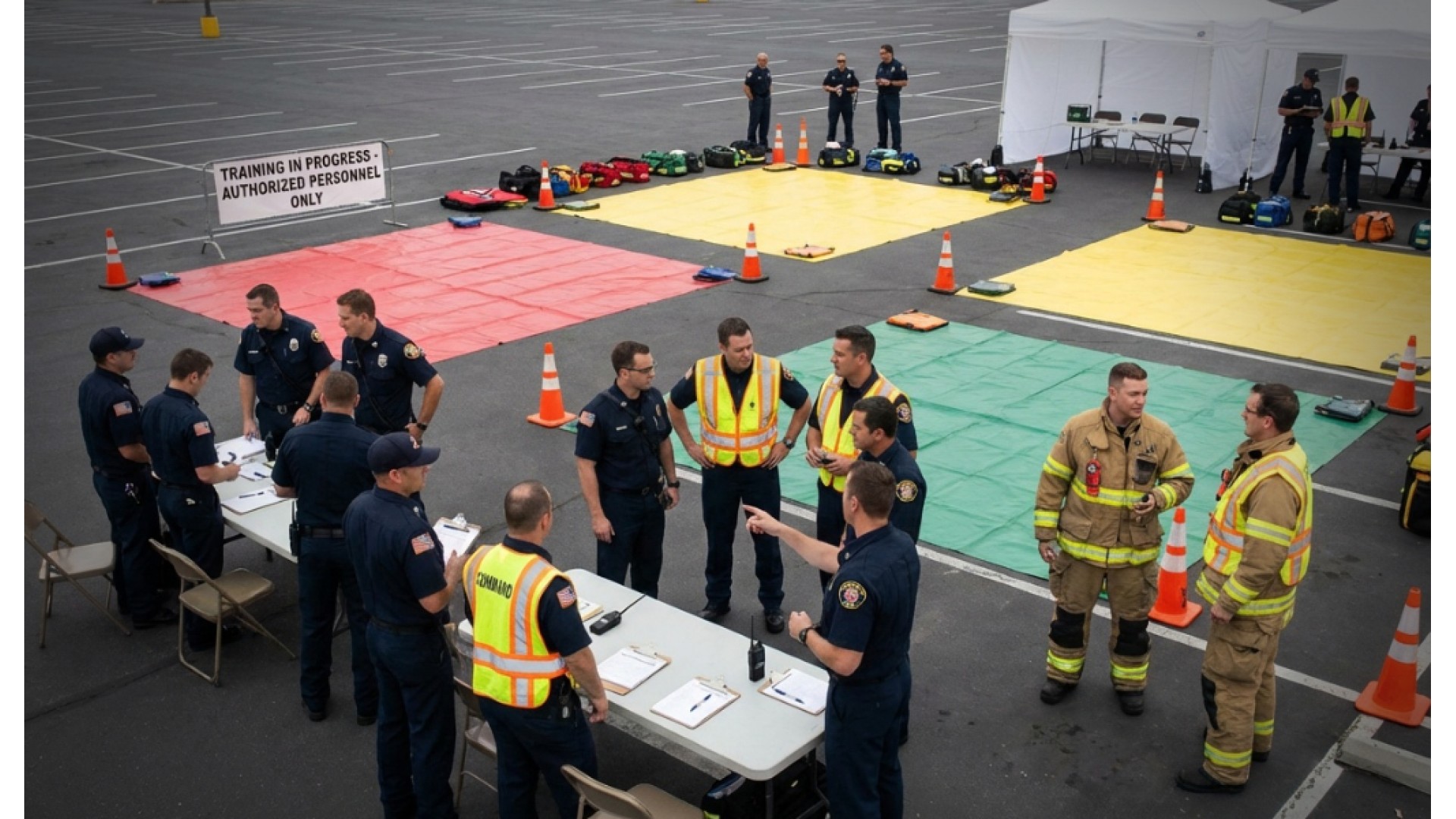
Color-coded triage remains a foundational component of MCI response. In many systems, black is still recognized as the category for deceased or expectant patients.
However, it is important to distinguish between:
- Triage classification (a clinical/operational decision) and
- Physical equipment (what responders carry and deploy in the first operational period)
Including a black category in triage protocols does not necessarily require a dedicated physical tarp in every rapid response kit.
Training vs. Field Application
While the operational use of black morgue tarps has declined in many real-world response environments, they continue to serve an important role in training.
DMS tabletop training kits will continue to include black tarps for the purpose of triage categorization and instructional clarity.
This allows responders to visually and functionally understand the full triage system during exercises, including the designation of deceased or expectant patients.
However, it is important to distinguish this training application from real-world operations, where movement and management of the deceased is often governed by law enforcement and medical examiner/coroner protocols. In this context, black tarps support learning and categorization - not necessarily field deployment practices.
Operational Priorities
In the early stages of an MCI, responder priorities are clear:
- Scene safety and hazard control
- Rapid triage and initial patient counts
- Hemorrhage control and lifesaving interventions
- Patient movement and transport coordination
- Accountability for living patients
Equipment carried into the scene must directly support these priorities.
In practice, many agencies have found that black morgue tarps are rarely deployed, while other tools - such as triage ribbons, tags, and accountability systems - are used immediately and continuously.
Deceased Patient Management Is Often Not an EMS Function
One of the most significant factors influencing this shift is jurisdictional responsibility during MCIs, particularly in violent or complex incidents.
In many responses:
- Law enforcement maintains control of the scene, especially when the incident is criminal in nature
- Medical examiners or coroners are responsible for fatality management and victim identification
- Deceased victims are not moved unless necessary for scene safety or to access viable patients
Guidance from federal and state sources reinforces this approach, emphasizing:
- Preservation of evidence
- Documentation of victim location
- Controlled handling of remains under proper authority
As a result, establishing a “morgue area” using a tarp is often inconsistent with how incidents are managed today.
Accountability Still Matters
While the physical use of black tarps has declined in many operational environments, fatality tracking and documentation remain critical functions within an MCI response.
For this reason, morgue position vests are still included and remain an important part of the system.
Personnel assigned to this function are responsible for:
- Documenting and maintaining an accurate count of fatalities
- Supporting incident reporting and after-action review (AAR) processes
- Coordinating with law enforcement and the medical examiner/coroner
- Communicating fatality information through the appropriate command structure
This ensures that, even when bodies are not moved or consolidated into a designated tarp area, fatalities are still tracked, reported, and managed appropriately within the incident command framework.
Minimizing Movement of the Deceased
Modern response protocols, especially in active threat or law enforcement-led incidents, frequently emphasize:
- Avoiding unnecessary movement of deceased individuals
- Maintaining original body position when possible
- Deferring handling decisions to law enforcement and medical examiner/coroner personnel
This operational reality further reduces the practical use of morgue tarps.
Aligning Equipment with Real-World Use
Rapid response kits must be:
- Efficient
- Purpose-driven
- Focused on immediate impact
By removing low-utilization components, agencies can prioritize equipment that directly support real-world operational priorities, including:
- Faster triage
- Clear patient categorization
- Improved accountability
- More effective treatment and transport coordination
This approach reflects what is consistently observed in training, exercises, and real-world after-action reviews.
Supporting Flexibility at the Agency Level
It’s important to recognize that protocols vary by jurisdiction.
Some agencies may still incorporate:
- Designated morgue treatment areas
- Morgue tarps as part of their local MCI plans
This shift is not about redefining doctrine; it is about aligning standard kit configurations with the most common operational practices.
For agencies that require them, black morgue tarps remain available for purchase separately to support local protocols and planning requirements.
Agencies should always follow local protocols, law enforcement direction, and medical examiner/coroner requirements.
Balancing Cost, Materials, and Kit Configuration
As part of this update, some agencies may notice that black morgue tarps have been removed while overall kit pricing remains unchanged.
This decision was influenced by ongoing increases in material and production costs, which have impacted all components across manufacturing.
At the same time, the inclusion of black morgue tarps has been evaluated over an extended period based on field use, training feedback, and operational relevance.
Given both factors - rising production costs and the limited use of morgue tarps during early response the decision was made to adjust the standard kit configuration while maintaining current pricing.
This change reflects both the realities of production and how these kits are most commonly used in practice.
If you have any question about this update or how it may apply to your agency, please reach out to us or your local DMS representative.
A Continued Focus on What Matters Most
At DMS, our focus remains on supporting responders with tools that improve:
- Clarity in chaotic environments
- Speed of decision-making
- Accountability across the incident
- Outcomes for salvageable patients
Preparedness is not static. It evolves with experience, guidance, and the realities of the field.
This shift reflects that evolution - and a continued commitment to ensuring that every component in a rapid response kit serves a clear, practical purpose when it matters most.
Related Product
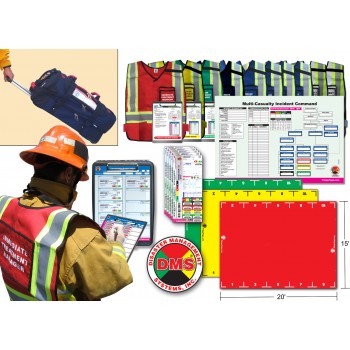
EMT3® 10 Position Rapid Response Kit
10 Position Rapid Response Kit A Complete Foundation for MCI ResponseIncludes our Rolling Duffe..

EMT3® 13 Position Rapid Response Kit
13 Position Rapid Response Kit Expandable to Meet the Needs of the Incident Includes our Rolli..
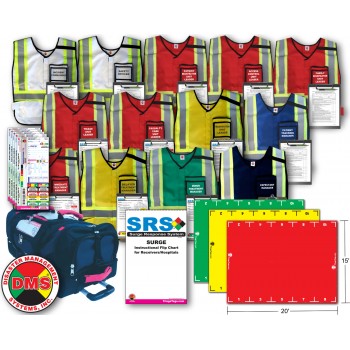
SRS® Rapid Response Kit with Rolling Duffel
SRS® Rapid Response Kit with Rolling Duffel SRS® Surge Response System - The Standard..
SRS® Rapid Response Kit with Rolling Duffel - SALT Version
SRS® Rapid Response Kit with Rolling Duffel - SALT Version SRS® Surge Response System ..