

- DMS
- 176 Views
Why Initial Triage Slows Down - And How to Fix It
- | 0 Comments
Why Initial Triage Slows Down - And How to Fix It
In a mass casualty incident, initial triage is one of the most time-sensitive moments in the response.
It’s where patient prioritization begins.
It’s where operational control starts to take shape.
And it directly impacts everything that follows - treatment, transport, and patient tracking.
But just as importantly, it’s also where early patient counts begin to emerge - providing critical information that drives resource requests and command decisions.
Yet even in well-trained teams, this phase is often slowed down by something simple:
Access to the right tools - and the ability to capture information as you go.
The Problem Isn’t Triage - It’s Operational Delays
Most responders are highly proficient in triage protocols such as START and SALT Triage.
The challenge isn’t decision-making - it’s execution under pressure.
In the first few minutes on scene:
- Supplies aren’t immediately accessible
- Triage ribbons or tags are buried in kits
- Responders lose valuable seconds locating what they need
- Patient counts are not consistently captured in real time
These small inefficiencies create operational delays at the exact moment speed and clarity matter most.
Why Initial Triage Impacts Command and Resource Ordering
Initial triage doesn’t happen in isolation.
It feeds directly into:
- Treatment area organization
- Transport prioritization
- Patient tracking and accountability
- Resource ordering and escalation decisions
Without a clear understanding of patient counts early in the incident, command staff are forced to estimate:
- How many ambulances are needed
- What level of mutual aid should be requested
- How to allocate resources across divisions
When patient counts are delayed or unclear, resource requests can be either insufficient or excessive - both of which impact overall incident management.
From an ICS/NIMS perspective, this affects:
- Operational clarity
- Resource coordination
- Accountability across divisions
Capturing Patient Counts at First Contact
Improving initial triage isn’t just about moving faster - it’s about capturing information as the situation develops.
Using ribbon-based triage for initial patient sorting provides a simple but effective advantage:
- Each ribbon applied represents a patient classification
- Counts can be tracked in real time
- Information can be relayed quickly to command
When paired with patient count cards, responders can maintain a running tally of patient categories as they move through the scene.
This creates a clearer operational picture early in the incident - supporting faster and more accurate resource requests.
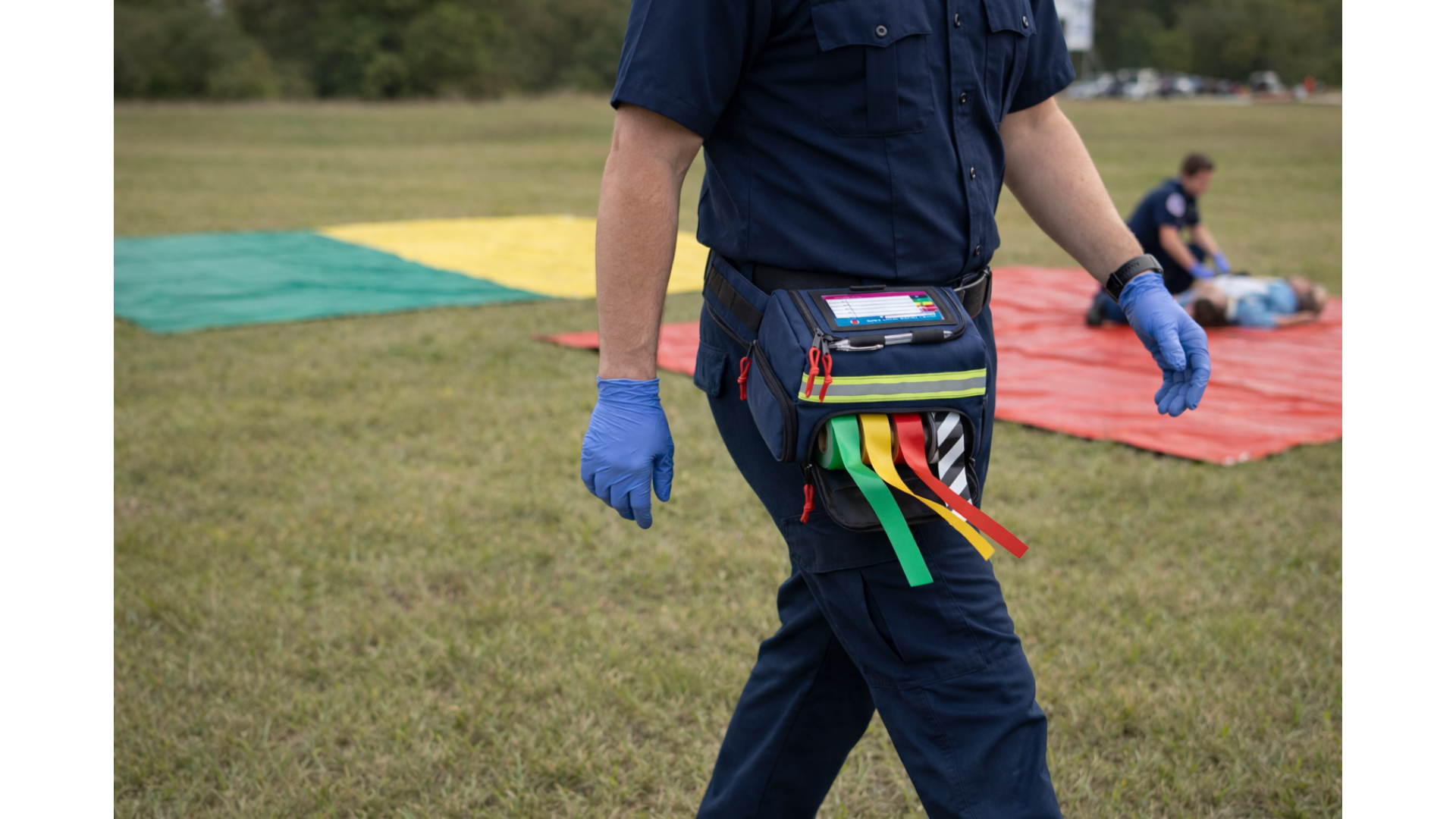
The 6-Bay Triage Ribbon Dispenser is designed to support both speed and accountability during initial triage.
It provides:
- Clear visual organization of ribbon categories
- Immediate access at the point of contact
- A structured way to track patient counts using integrated patient count cards
As ribbons are deployed, counts can be recorded simultaneously - allowing responders to:
- Maintain momentum during triage
- Capture accurate patient data in real time
- Communicate reliable information to command
Instead of searching for supplies or relying on estimates, responders can grab, tear, apply, record, and move on.
Supporting the Full MCI Workflow
Efficient initial triage supports everything that follows.
When patient prioritization and counts are established early:
- Treatment areas can be organized more effectively
- Transport decisions become more structured
- Resource requests can be made with greater confidence
- Patient tracking systems - such as the EMT3® System - operate with greater clarity
This connection between initial triage and downstream accountability is critical.
A strong start leads to a more controlled and coordinated incident overall.
Choosing the Right Configuration for Your Team
For agencies already using ribbon-based triage systems, configuration matters.
The 6-Bay Triage Ribbon Dispenser remains a reliable option for teams looking for a compact, streamlined setup supporting both speed and patient count accuracy during initial triage.
Supporting SALT Triage Protocols
For agencies utilizing the SALT Triage system, ribbon configuration becomes especially important.
SALT triage includes five patient categories:
- Immediate
- Delayed
- Minor
- Expectant
- Deceased
Because of this, a five-ribbon configuration is required to fully support the protocol.
While a 4-Bay Triage Ribbon Dispenser can support streamlined setups, it does not accommodate all SALT categories - specifically the additional ribbon needed for the Expectant classification.
The 6-Bay Triage Ribbon Dispenser is designed to support full SALT implementation, ensuring all patient categories are clearly represented and immediately accessible during initial triage.
When protocols define five categories, your tools should reflect that reality in the field.
Where This Fits in Your Setup
The 6-Bay Triage Ribbon Dispenser is not a replacement for your existing system - it’s an enhancement.
It integrates into:
- Rapid Response Kits
- EMT3® MCI kits
- Department-level preparedness setups
For agencies focused on improving both speed and accountability, it offers a simple upgrade with immediate impact.
Final Thoughts
Initial triage will always be fast-paced and high-pressure.
But it doesn’t have to be slowed down - or disconnected from the information command needs to make decisions.
By improving organization, access, and real-time patient count tracking at first contact, agencies can reduce operational delays, strengthen situational awareness, and support faster, more accurate resource ordering - leading to a more effective response overall.
Related Product
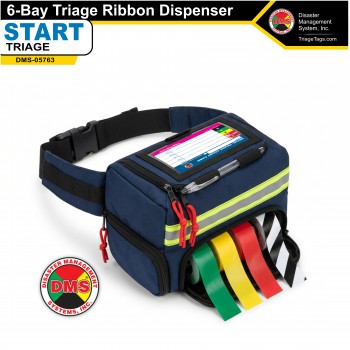
6-Bay Triage Ribbon Dispenser
6-Bay Triage Ribbon Dispenser - START Triage Designed to Maximize Speed and Efficiency of Ini..
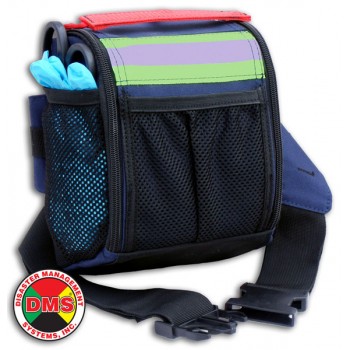
Compact 4-Bay Triage Ribbon Dispenser
Compact 4-Bay Triage Ribbon Dispenser Designed to Maximize Speed and Efficiency of Ribbon Triag..

Tactical Triage Chest Pack Ribbon Dispenser
Tactical Triage Chest Pack Ribbon Dispenser 2013 EMS World Innovation of the Year Optim..