Incident Command
Incident Command System (ICS) Tools for Fire & EMS Operations
The Incident Command System (ICS) is the standardized approach used to manage emergency incidents, providing structure for command, control, and coordination across responding agencies. ICS enables fire, EMS, law enforcement, and other responders to operate within a unified framework, ensuring clear communication, defined roles, and efficient use of resources during any incident.
From routine responses to large-scale mass casualty incidents, ICS establishes a scalable structure that adapts to the complexity of the situation. Whether managing a single-unit response or a multi-agency disaster, this system ensures that personnel, equipment, and information are organized under a common operational strategy.
Built on decades of real-world incident experience, ICS emphasizes accountability, span of control, and standardized terminology - reducing confusion and improving coordination when multiple agencies are working together under pressure.
Command, Control, and Coordination on Scene
Effective incident command is critical to maintaining situational awareness and operational control. ICS provides a structured hierarchy that supports decision-making, resource management, and communication from the moment the first unit arrives through the duration of the incident.
Refine Search
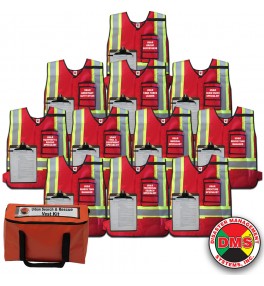
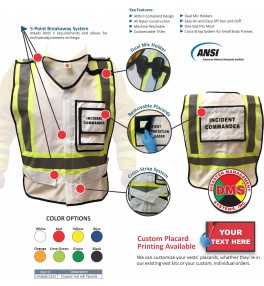
Urban Search & Rescue Vest Kit
Urban Search & Rescue Vest Kit Identifies Technical Rescue Personnel Designed to iden..
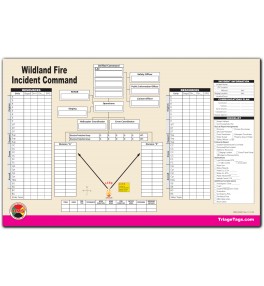
Wildland Fire Incident Command Worksheet Pad
Wildland Fire Incident Command Worksheet Refill Pad Designed to Help Document and Facilitate th..
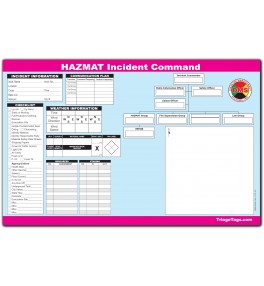
HAZMAT Incident Command Worksheet Pad
HAZMAT Incident Command Worksheet Refill Pad Designed to Help Document and Facilitate the ..
Understanding the Incident Command Structure
The Incident Command System organizes emergency response into standardized functional areas, each led by a designated role responsible for managing specific aspects of the incident. This structure ensures clear leadership, accountability, and efficient coordination across all operations.
- Command: Led by the Incident Commander, responsible for overall incident objectives, strategy, and operational direction
- Operations: Led by the Operations Section Chief, responsible for tactical response activities including fire suppression, rescue, and EMS operations
- Planning: Led by the Planning Section Chief, responsible for collecting and evaluating information, maintaining situational awareness, and developing the Incident Action Plan
- Logistics: Led by the Logistics Section Chief, responsible for providing personnel, equipment, and support resources
- Finance & Administration: Led by the Finance/Administration Section Chief, responsible for cost tracking, timekeeping, and administrative functions
Clearly defined leadership roles within ICS ensure that each function operates efficiently while maintaining a manageable span of control during incidents of any size.
These five functional areas form the foundation of ICS, allowing agencies to coordinate efficiently and maintain a manageable span of control during incidents of any size.
Why ICS Matters for Fire & EMS
- Establishes a clear chain of command and accountability
- Improves communication across multiple agencies and jurisdictions
- Enhances responder safety through structured operations
- Supports efficient resource allocation and deployment
- Provides scalability from routine calls to large-scale disasters
ICS is widely adopted across the United States as part of the National Incident Management System (NIMS) and is used by fire departments, EMS agencies, law enforcement, and emergency management organizations nationwide.
Common Incident Command Use Cases
- Structure fires and fireground operations
- Mass casualty incidents (MCIs)
- Hazardous materials (HazMat) responses
- Natural disasters and large-scale emergencies
- Planned events and public safety operations
Explore Related Command & Response Solutions
- EMT3® MCI Response Kits
- All Risk® Triage Tags
- Triage Ribbon Dispensers
- Emergency Operations Center (EOC) Solutions
- Evac123® Patient Evacuation System (facility and regional coordination)