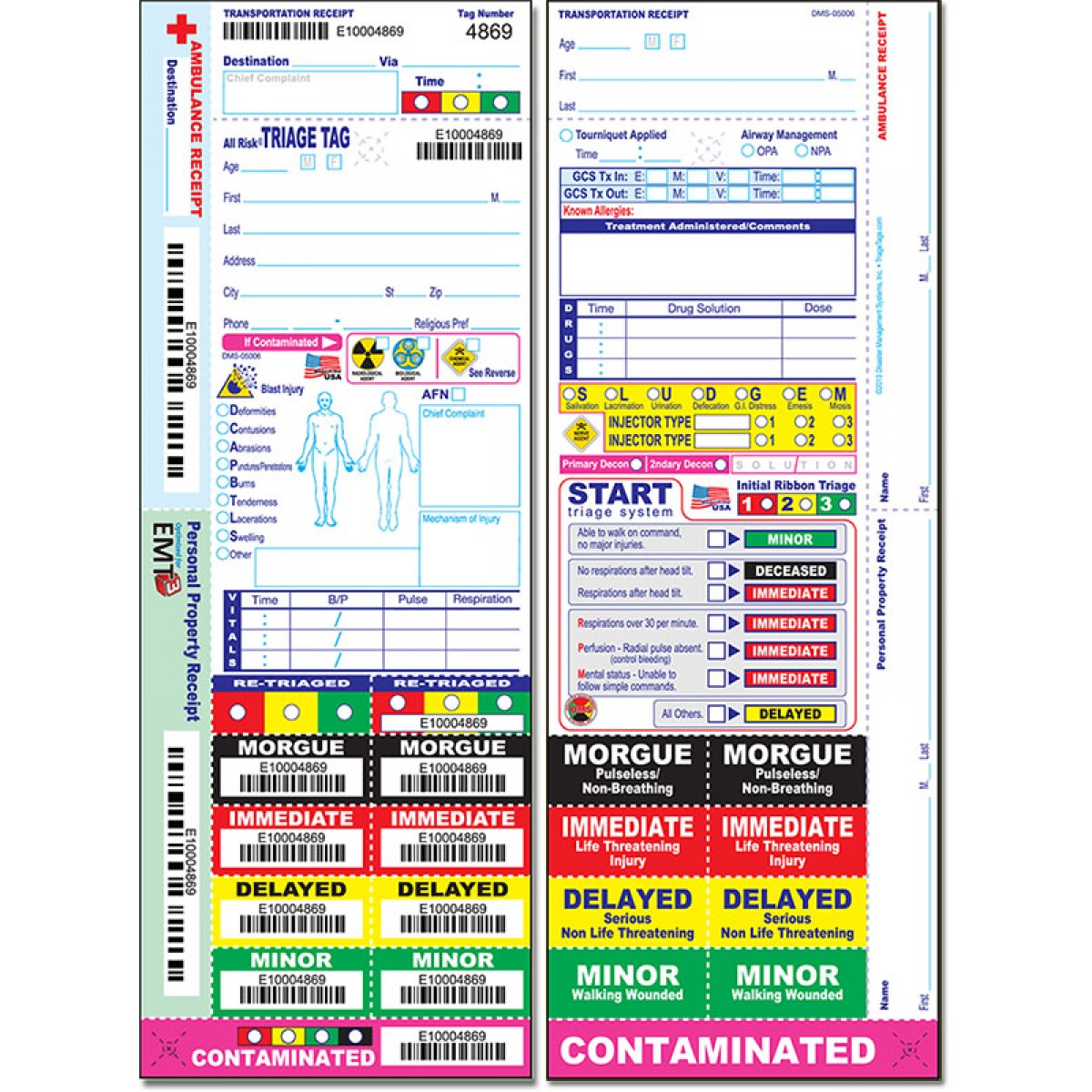
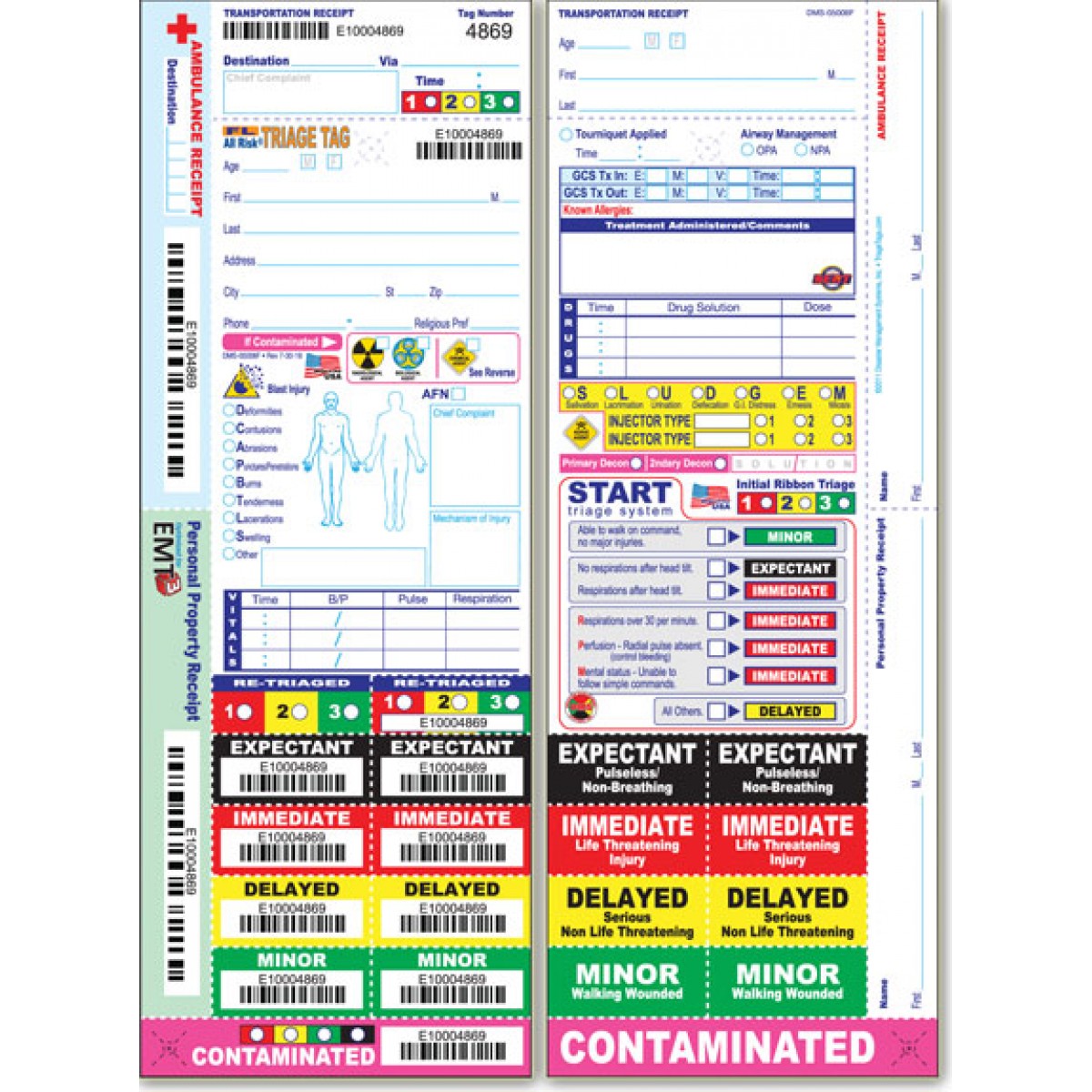
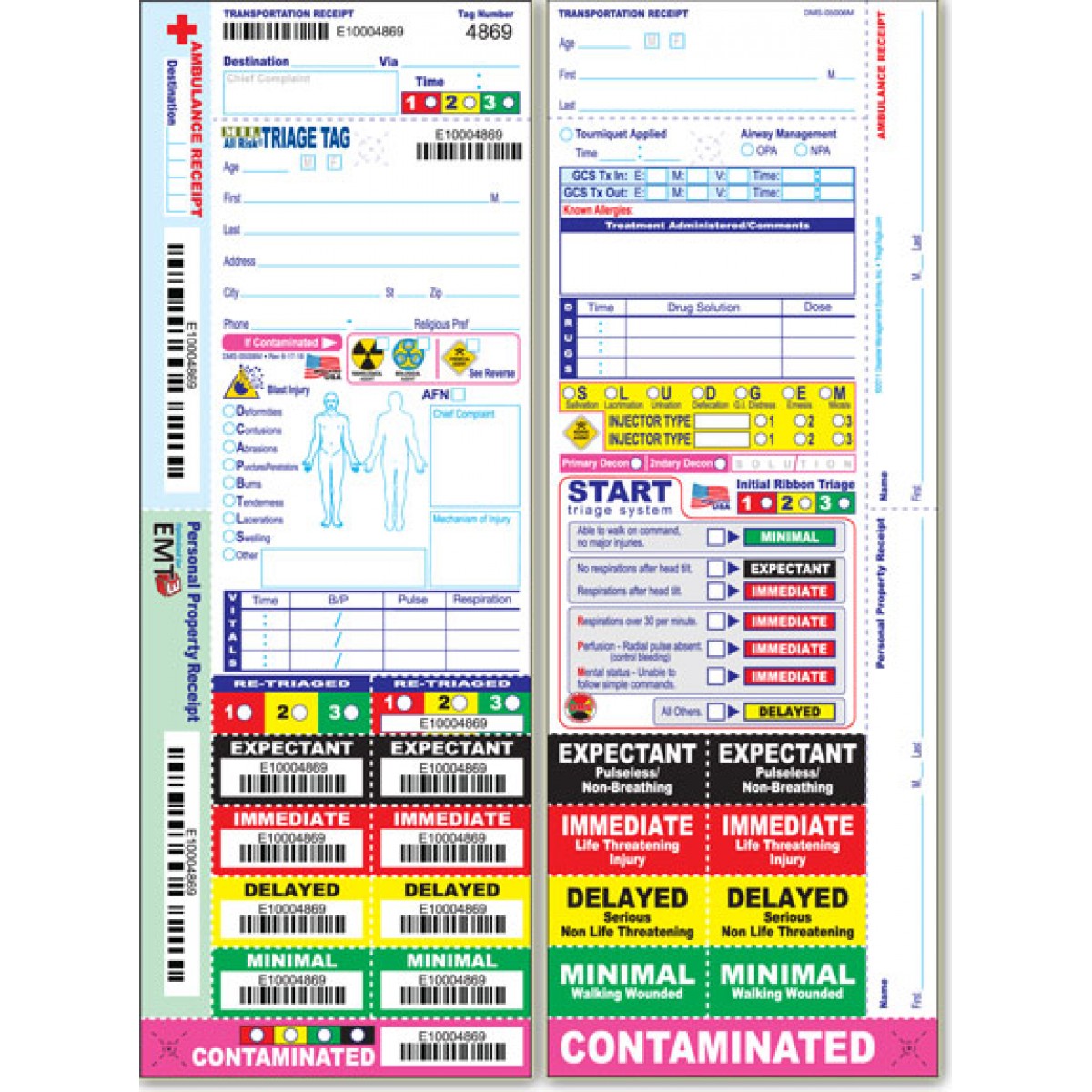
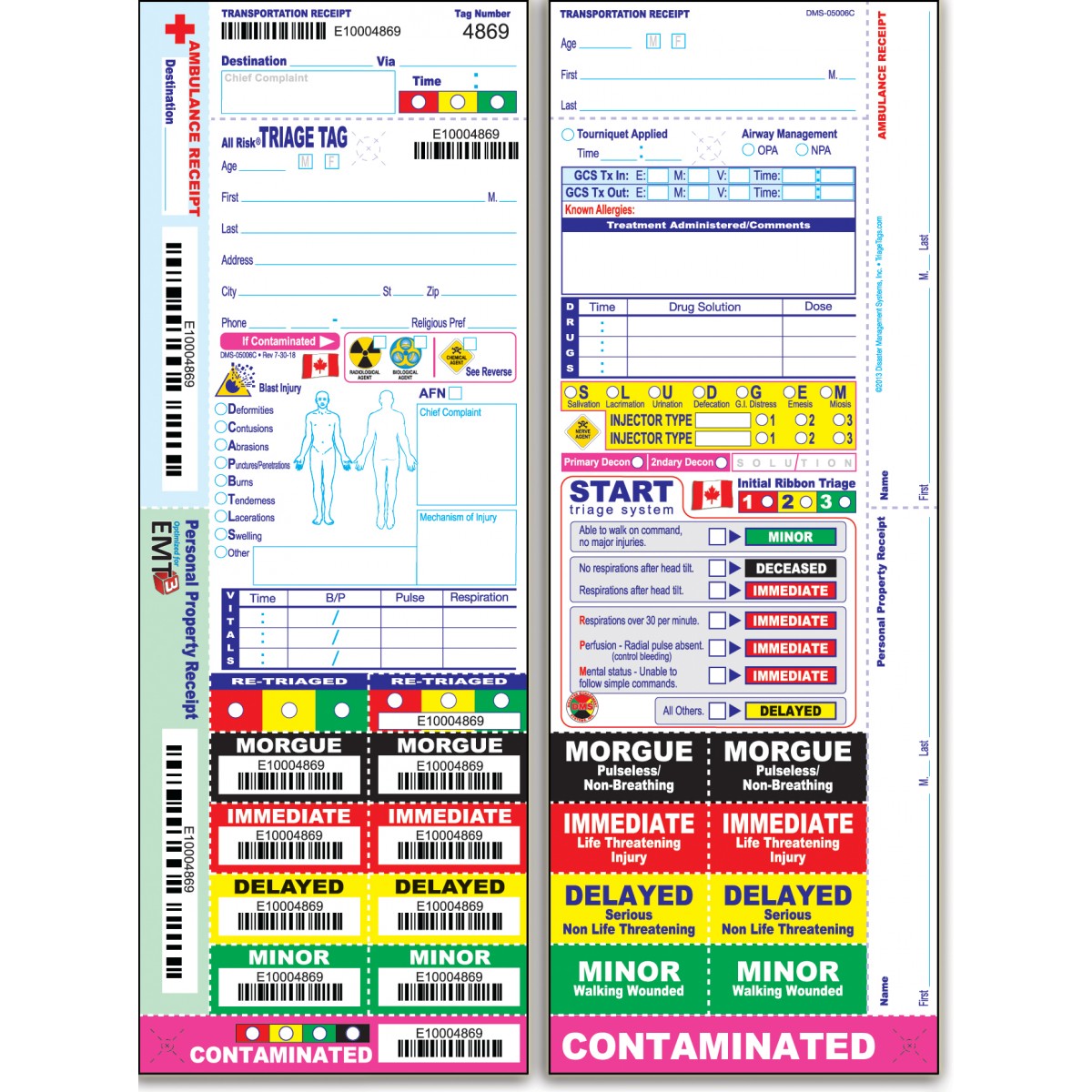
All Risk® Triage Tags, Non-Wristband Series
- Product Code: DMS-05006 Series
- Availability: In Stock


All Risk® Triage Tags, Non-Wristband Series
Designed for Secondary Triage, Patient Tracking, and MCI Documentation
The All Risk® Non-Wristband Triage Tag Series is designed to support mass casualty incident operations after initial triage has been completed. These tags help treatment and transport personnel document patient condition, acuity level, treatment information, contamination status, and destination details during MCI response.
Available in Standard, Florida, Military, SALT, RAMP, and Canadian versions. Providing agencies flexible triage tag options based on local protocols, response environments, and documentation needs.
Key Features:
► Waterproof / Blood Proof material
► Cotton string to secure tag to patient or belongings
► Bar code for tracking and property identification
► Supports secondary triage documentation
► Enhanced transportation receipt for patient movement tracking
► Areas for contamination, decontamination, allergies, blast injury, tourniquet use, airway management, and GCS documentation
► Designed for MCI treatment, transport, and patient accountability workflows
► 50 triage tags per pack
Built for Use After Initial Triage
Triage ribbons are commonly used during rapid initial triage to quickly identify patient acuity. Once patients are moved into treatment areas, triage tags provide a more complete method for documenting patient condition, care, tracking details, and transport information.
The All Risk® Non-Wristband Triage Tag helps responders maintain patient accountability from treatment through transport by keeping critical information attached to the patient and available to treatment, transportation, and patient tracking personnel.
Available Versions
► Standard Version: General MCI triage tag format for field and treatment area use
► Florida Version: Uses “EXPECTANT” instead of “MORGUE”
► Military Version: Uses “EXPECTANT” instead of “MORGUE” and “MINIMAL” instead of “MINOR”
► SALT Version: Includes the SALT triage algorithm
► RAMP Version: Includes the RAMP triage algorithm
► Canadian Version: Includes the Canadian flag rather than the American flag
Common Uses
► Mass casualty incident response
► Fire/EMS treatment area operations
► Hospital surge and emergency preparedness planning
► Multi-agency disaster response exercises
► Secondary triage and re-triage documentation
► Patient transport coordination
► MCI training and tabletop exercises
Compatible Response Tools
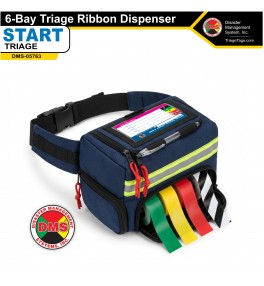
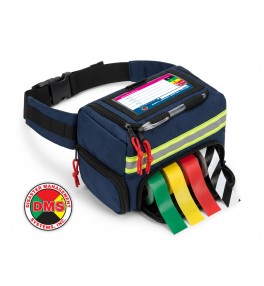
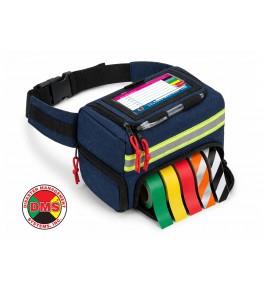
Pair All Risk® Non-Wristband Triage Tags with triage ribbon dispensers, treatment area supplies, EMT3® response kits, and patient tracking tools to support a more complete MCI workflow.
Explore Triage Ribbon Dispensers Explore EMT3® Go-Kits View All Risk® Triage Tags
California Proposition 65 Warning:
This product may expose you to chemicals known to the State of California to cause cancer and reproductive harm. For more information, visit
www.P65Warnings.ca.gov.
All Risk® Non-Wristband Triage Tags for MCI Response
All Risk® Non-Wristband Triage Tags are designed for agencies that need a durable, field-ready triage tag for documenting patient information during mass casualty incidents. Like the wristband versions, these tags use a cotton string to secure the tag to the patient, patient clothing, equipment, or belongings depending on the response environment and agency preference.
The primary difference between wristband and non-wristband versions is operational preference and patient identification workflow. Wristband versions include an integrated patient wristband that can be applied later in the incident or once the patient reaches a treatment or hospital environment, while non-wristband versions maintain a more traditional triage tag configuration.
Each tag supports secondary triage documentation and patient tracking by providing space for acuity level, treatment details, contamination status, decontamination information, airway management, allergies, GCS information, tourniquet use, blast injury indicators, and transport documentation.
Why Use Non-Wristband Triage Tags?
Non-wristband triage tags are commonly used by agencies that prefer a more traditional triage tag configuration during MCI response. This format is useful in field response, treatment areas, hospital surge environments, and training scenarios where responders need a visible and portable method for documenting patient information.
These tags help bridge the gap between initial triage and patient movement. Once a patient has been categorized through initial triage, the triage tag becomes a central documentation tool for treatment area personnel, transportation officers, and patient tracking teams.
Supporting Treatment, Transport, and Patient Accountability
During an MCI, patient information must move with the patient. The All Risk® Non-Wristband Triage Tag supports this process by helping responders document condition, care, acuity level, and transport details in one organized format.
The enhanced transportation receipt is especially useful when paired with a receipt holder. This allows patient number, acuity, and destination information to remain available for quick reference during ambulance loading, patient movement, and destination tracking.
Designed to Fit Multiple Triage Protocols
This series includes multiple versions to support different agency protocols and terminology preferences. Standard, Florida, Military, SALT, RAMP, and Canadian versions allow organizations to select the tag format that best aligns with their operating procedures, training programs, and response environment.
The Florida version uses “EXPECTANT” instead of “MORGUE.” The Military version uses “EXPECTANT” instead of “MORGUE” and “MINIMAL” instead of “MINOR.” SALT and RAMP versions include triage algorithm references specific to those systems.
How These Tags Fit Into the MCI Workflow
In many MCI operations, responders use ribbons or other rapid indicators during initial triage. Once patients are moved to treatment areas, triage tags provide a more detailed documentation method for secondary triage, treatment notes, transport coordination, and patient accountability.
This makes All Risk® Non-Wristband Triage Tags a practical component of a larger MCI response system that may also include triage ribbon dispensers, treatment area tarps or flags, EMT3® Go-Kits, command vests, patient tracking forms, and transportation worksheets.
Frequently Asked Questions
What is the difference between wristband and non-wristband triage tags?
Both versions utilize a cotton string to secure the triage tag to the patient, clothing, equipment, or belongings. Wristband versions additionally include an integrated patient wristband that can be applied later in the patient care process, often once the patient reaches a treatment area or hospital environment. The choice between versions is typically based on agency preference and operational workflow.
When should non-wristband triage tags be used?
Non-wristband tags are commonly used during secondary triage, treatment area operations, patient transport coordination, disaster drills, and MCI documentation workflows.
Are these tags waterproof?
Yes. All Risk® Triage Tags are designed with waterproof / blood proof material for field and disaster response environments.
How many tags come in each pack?
Each pack includes 50 triage tags.
Can these tags be used with SALT triage?
Yes. A SALT version is available within this series and includes the SALT triage algorithm.
Can these tags be used with RAMP triage?
Yes. A RAMP version is available within this series and includes the RAMP triage algorithm.
What is different about the Florida version?
The Florida version uses the term “EXPECTANT” rather than “MORGUE.”
What is different about the Military version?
The Military version uses “EXPECTANT” instead of “MORGUE” and “MINIMAL” instead of “MINOR.”
What is the transportation receipt used for?
The transportation receipt helps document patient number, acuity level, and destination information during ambulance loading and patient movement.
Related Products
Triage Ribbon Dispensers | 6-Bay Triage Ribbon Dispenser Series | EMT3® Go-Kit Series | Mass Casualty Incident Products | Hospital & Clinic Preparedness Products